Thinking about buying a Providence multi-family as your first investment? You are not alone. In a city with a large renter population, classic triple-deckers, and flexible owner-occupied financing options, small multi-family properties can look like a smart way to start building wealth. The key is knowing how Providence really works before you make an offer. Let’s dive in.
Why Providence attracts beginners
Providence gives new investors a few things they usually want in one market: strong rental demand, a large stock of small multi-family properties, and options for buyers who may want to live in one unit and rent the others.
According to the U.S. Census QuickFacts for Providence, the city had an estimated 194,706 residents as of July 1, 2024, an owner-occupied housing unit rate of 41.4%, and a median gross rent of $1,408 for 2020-2024. The city’s planning appendix also notes that 52% of households rented in 2020 and rental vacancy was 6.1%, which helps explain why many first-time investors look at Providence for long-term rental opportunities.
Providence also has a large employment base. The city reports that it holds almost 23% of Rhode Island jobs, with a high concentration in education, health, and social services. That matters because steady employment centers can help support long-term housing demand.
Multi-family types you will see
If you are just getting started, you will usually run into three common small multi-family formats in Providence:
- Duplexes or two-families
- Three-families, often called triple-deckers
- Small four-unit buildings
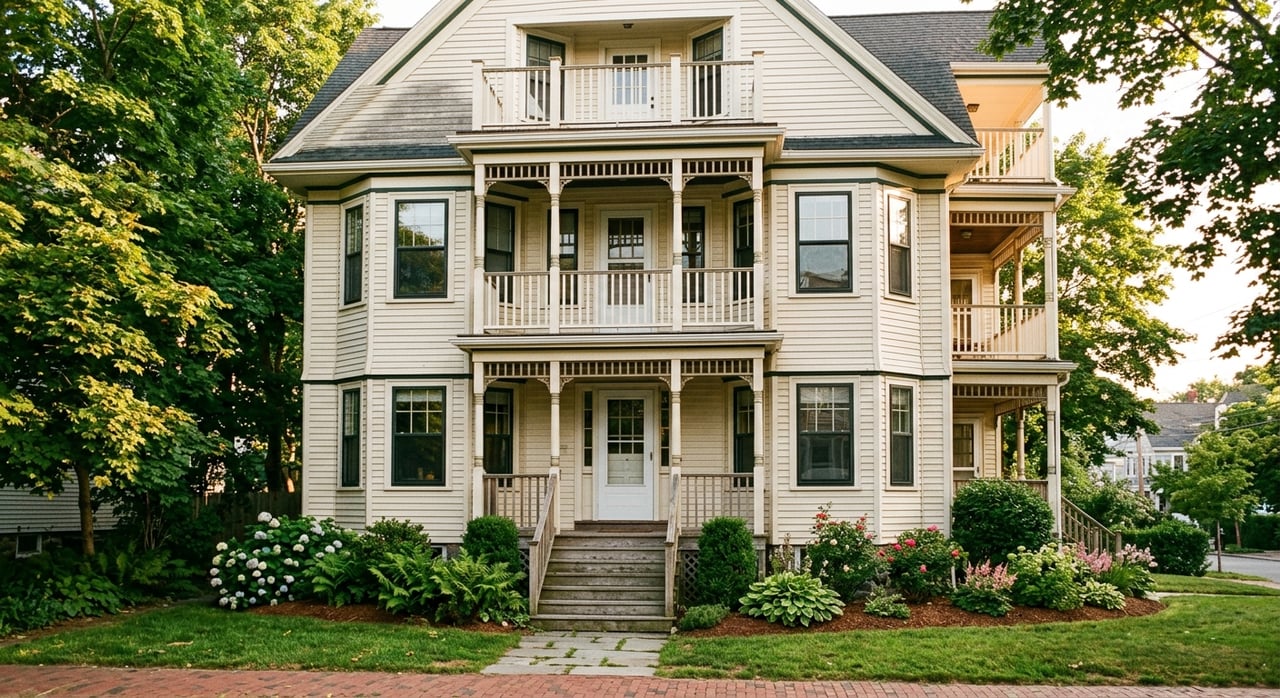
Triple-deckers are especially tied to the local housing landscape. The Providence Preservation Society describes them as a classic southern New England multi-family type and notes that they are one of Rhode Island’s densest forms of urban development.
For a beginner, this is helpful because these properties often have a straightforward layout. In the traditional form, each floor contains one unit, with stairs at the front and rear. That can make it easier to understand how the building functions, but it does not mean the property is simple to own.
Older buildings change the math
This is one of the biggest lessons for new investors in Providence: an older building can produce solid income, but it can also produce expensive surprises.
The city says most Providence structures are more than 80 years old. That age can affect heating costs, repairs, fire risk, and lead-based paint risk. In other words, your real costs may be shaped just as much by the roof, porches, basement moisture, heating system, stairways, and electrical service as by the number of bedrooms.
For first-time buyers, this means cosmetic updates should not be your main focus. Fresh paint and nice flooring matter less if the furnace is near the end of its life or the porches need major work. A property that looks affordable at first glance may not stay affordable once repair and reserve costs are added in.
How rental demand works in Providence
Providence is a renter-heavy market, but demand is not driven by just one group.
The local economy includes a strong concentration of education and health-related jobs, and several major colleges contribute to off-campus demand. Brown, Providence College, RISD, and Johnson & Wales University all have on-campus housing rules for some student groups, yet upperclassmen and students with exceptions still remain part of the off-campus rental pool. That helps support demand in certain areas, especially where access to universities, downtown employment, and transit is practical.
At the same time, it helps to stay realistic about rent data. Recent rent trackers show Providence asking rents around $2,094 to $2,201 per month in spring 2026, but those numbers are not directly comparable to Census median gross rent because they use different methods and rental samples. That is a good reminder to treat online rent estimates as a starting point, not your final underwriting number.
Best beginner strategy in Providence
For most first-time investors, a long-term rental plan is usually the clearest path.
That could mean buying a duplex, triple-decker, or small 2- to 4-unit property and renting all units long term. It could also mean buying as an owner-occupant, living in one unit, and renting the others. In many cases, that owner-occupied route can be a practical way to enter the market with less cash than many buyers expect.
Freddie Mac’s guidance on 2- to 4-unit properties notes that owner-occupied primary residences with 2 to 4 units may be eligible under its programs, rental income from the other units may be used for qualifying, and some eligible Home Possible borrowers may be able to put as little as 3% down. The same source also notes that FHA-insured financing can apply to 2- to 4-unit properties, with a 3.5% minimum required investment from approved sources.
That is why many beginners consider a small multi-family “house hack” in Providence. It is not a guaranteed fit for every buyer, but it can be a useful option if you want to offset your housing costs while learning how rental property ownership works.
What to analyze before making an offer
Before you get attached to a property, slow down and verify the basics.
Start with these questions:
- Is the legal unit count the same as the way the property is being marketed?
- What is the current occupancy?
- What does the current rent roll show?
- How are utilities set up?
- Does the asking price still make sense after repairs and reserves?
In Providence, utility setup matters more than many beginners realize. If owners pay for heat, water, or other major costs, your monthly cash flow can look very different than it would in a separately metered building.
Parking and access also deserve a close look. The city reports that 65% of working residents drive to work, while 8.1% walk and 5.4% use public transit. That means driveway space, street parking, and general commute convenience can affect how attractive the property feels to future tenants.
Providence compliance you cannot ignore
In this market, compliance is not a side issue. It is part of the investment itself.
If the property is a rental in Rhode Island, landlords must register it in the statewide rental registry, and annual re-registration is required. The state also says that pre-1978 rental properties generally need lead certificates. According to the Rhode Island Department of Health landlord guidance, noncompliance can trigger monthly fines and may block nonpayment evictions.
That is a major point for beginner investors because much of Providence’s housing stock is older. If you are buying a pre-1978 building, you should go into the deal assuming lead compliance needs to be reviewed carefully.
If your plan involves Airbnb-style use, there is another layer. The City of Providence short-term rental page states that entire dwelling units used as short-term rentals require a temporary use permit, while owner-occupied private bedroom rentals do not. For many beginners, that extra step makes a standard long-term rental strategy simpler and easier to predict.
A simple cash flow framework
You do not need a complex spreadsheet to start evaluating a small multi-family. You do need a realistic one.
A beginner underwriting model usually starts with gross scheduled rent, then subtracts vacancy, operating expenses, and debt service. In Providence, that expense side should include more than the obvious line items.
Build in room for:
- Property taxes
- Insurance
- Fuel or heating costs
- Water and sewer
- Routine maintenance
- Turnover costs
- Repair reserves for older-building issues
Because Providence has an older housing stock, your reserve planning matters. A building that produces modest but stable cash flow after honest expense assumptions is usually safer than one that only works if everything goes perfectly.
How to choose the right property
For your first deal, simpler is often better.
A smaller 2- to 4-unit property with clear utility separation, documented rents, manageable deferred maintenance, and a location with practical access to jobs, universities, or transit may be easier to operate than a property with messy occupancy, unclear permits, or major structural issues.
You do not need the flashiest building. You need one that you can understand, finance, maintain, and hold with confidence. That mindset can save you from buying a property that looks exciting online but becomes stressful once the real numbers come into view.
Final thoughts for first-time investors
Providence can be a strong place to start with multi-family investing, especially if you want a market with established rental demand and a local supply of duplexes, triple-deckers, and small apartment buildings. But beginner success here usually comes from discipline, not hype.
If you stay conservative with repairs, reserves, vacancy, and compliance, you can make smarter decisions from the beginning. And if you are thinking about living in one unit while renting the others, the right property may give you a practical path into both homeownership and investing.
If you want local guidance as you explore Providence multi-family opportunities, Chanthaly Morin offers patient, relationship-first support to help you evaluate your options and move forward guided with care.
FAQs
What makes Providence a good market for beginner multi-family investing?
- Providence has a renter-heavy housing profile, a large supply of small multi-family properties, and demand tied to local jobs, universities, and off-campus renters.
What types of multi-family properties are common in Providence?
- Beginners in Providence will often see duplexes, three-families or triple-deckers, and small four-unit buildings.
What should a beginner check before buying a Providence multi-family?
- You should verify legal unit count, current occupancy, rent roll, utility setup, repair needs, and whether the numbers still work after adding reserves and operating costs.
Why do old buildings matter when buying a Providence investment property?
- Providence has many buildings that are more than 80 years old, so heating systems, roofs, porches, electrical service, moisture issues, and stair conditions can have a big impact on costs.
What are the lead rules for Providence rental properties?
- Rhode Island requires rental registration, annual re-registration, and generally lead certificates for pre-1978 rental properties, so compliance should be reviewed before you buy.
Can you buy a Providence multi-family as an owner-occupant?
- Yes, eligible buyers may be able to finance a 2- to 4-unit primary residence with owner-occupied loan options and use rental income from other units for qualifying, depending on the loan program and lender.
Are short-term rentals easy to do in Providence multi-family properties?
- Not always, because entire dwelling units used as short-term rentals require a temporary use permit in Providence.
What is the best beginner strategy for a Providence multi-family property?
- For many first-time investors, a long-term rental or owner-occupied 2- to 4-unit purchase is the most practical starting strategy.